

Archives

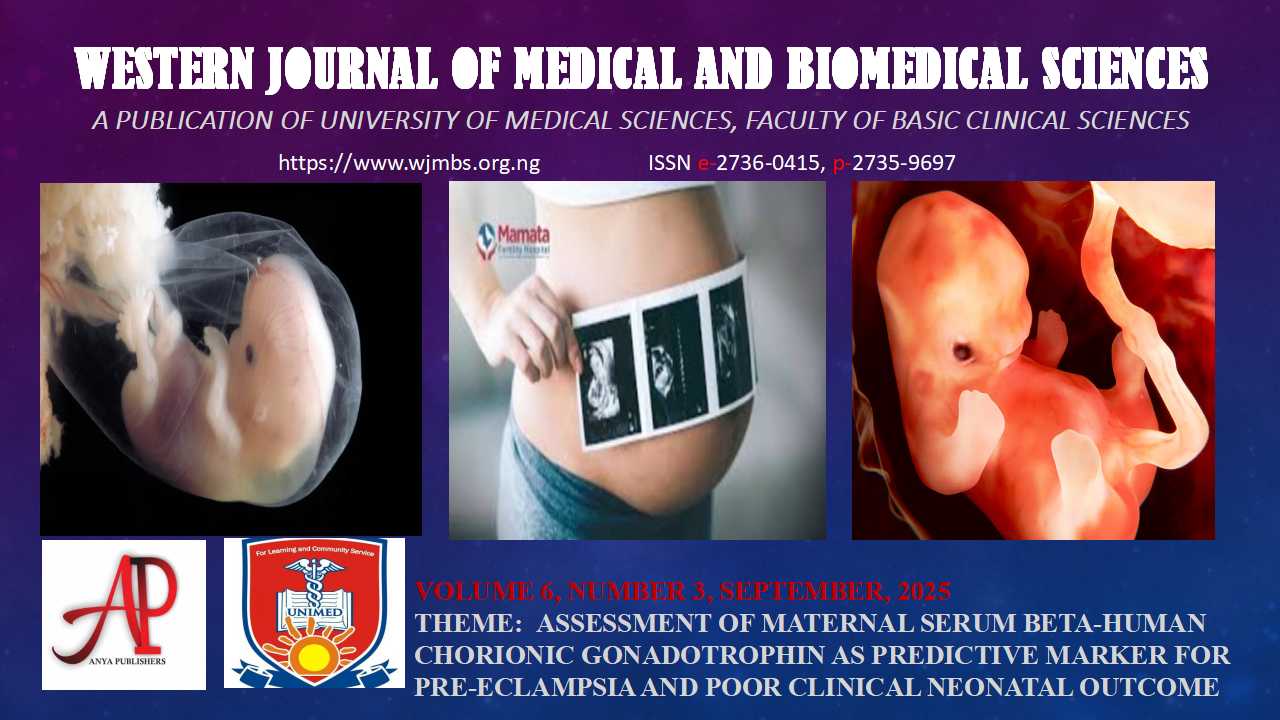
  • Assessment of the usefulness of maternal serum beta-human chorionic gonadotrophin as predictive marker for pre eclampsia and poor clinical neonatal outcome
    Vol. 6 No. 3 (2025)

    FOREWARD

    This Volume 6 Number 3, the third issue for WJMBS 2025 goes with the title: “Assessment of the usefulness of maternal serum beta-human chorionic gonadotrophin as predictive marker for pre eclampsia and poor clinical neonatal outcome” where authors critically looked at the maternal plasma levels of beta-human chorionic gonadotrophin and its effect on pregnancy-related hypertension and neonatal outcomes. They found that maternal serum levels of βhCG of preeclamptic women were significantly higher compared to the controls (5189.91±7.35, 3943.71±53.21 mIU, p=0.000). Also, there were significant negative correlations between βhCG, with birth weight (r=-0.371, p=0.000), and Apgar score (r= -0.385, p=0.000). They therefore concluded that the predictive power of βhCG for developing pre-eclampsia and poor neonatal outcomes was excellent and good, respectively. In another study, a team of researchers looked at the patterns, predictors and delays in diagnosing retained placenta at a tertiary hospital. They found that: Most patients were unbooked 15 (71.4%) and multiparous 11 (52.4%). and that unbooked pregnancy 15 (71.4%), preterm delivery 10 (47.6%), and previous D&C 8 (38.1%) were the common risk factors. The commonest subtype was trapped placenta 11 (52.4%) and the average diagnostic duration of retained placenta was 82.0 ± 36.9 minutes. High parity (AOR: 26.28, p=0.032) and previous D&C (AOR: 17.14, p=0.034) were found to be the independent predictors. Due to the growing incidence of cardiovascular diseases and diabetes mellitus in Nigeria and indeed the global community, a team of researchers set out to assess the pattern of dyslipidemias, associated atherogenic risk and insulin sensitivity in type 2 diabetes mellitus among confirmed diabetic patients and control study group consisting of a healthy population. They found that: the combined dyslipidemia pattern had the highest percentage among the subjects, with a value of 52(45.6%) observed. This was followed by mixed dyslipidemias with a value of 50(43.9%). A higher percentage of increased risk of CVD was found among the subjects for CRI-I (74; 52%), CRI-II (73; 51.8%), and AC (75; 53.2%) compared with control CRI-I (15; 10.7%), CRI-II (7; 5.0%) and AC (15; 10.7%), p-values <0.001. A greater percentage of the subjects demonstrated insulin resistance, as indicated by HOMA-IR (79, 56.0%) and QUICKI (64, 45.4%), compared to the controls with p <0.001. HbA1C correlated with HOMA-IR (r=0.235, p=0.005) and QUICKI (r=-0.196, p=0.020). Mixed dyslipidemias (elevated total cholesterol, elevated LDL-C and low HDL-C) were the highest form of dyslipidemia pattern observed. And that, CRI-I, CRI-II and AC were found to be better predictors of CVD than an ordinary lipid profile.

    Professor Michael Simidele Odimayo

    Editor-In-Chief

  • An Uncommon Case of Tuberous Sclerosis Complex
    Vol. 6 No. 1 (2025)

    FOREWORD

    The volume Six, Issue 17, number One, the first quarter issue of 2025 goes with the title   “Cortical Tubers Without Neurological Symptoms: “An Uncommon Case of Tuberous Sclerosis Complex”. The authors stressed that not all cases of Tuberous Sclerosis Complex (TSC) present with all the classical features as there are also phenotypic non-classical variants of the same disease. That it is a rare genetic neurocutaneous syndrome often characterized by presence of benign nodules in different parts of the body including brain. A thorough clinical and radiological examinations will help diligent physicians to identify non-classical phenotypic variants.

    In another study researchers x-rayed Primary Health Care Under One Roof (PHCUOR) In Nigeria in retrospect in order to ascertain the successes and failures attained so far. And they came to the conclusion that the policy which is backed by law has failed to attained the desired impact due to myriad of challenges. Some of which include infrastructural constraints, inadequacy of staff to drive it, and unwillingness of the relevant health personnel to show understanding, work as a team to ensure its success.

    Hydroxyurea has been reported to be effective in the management of patients with sickle cell disease and in this vein a team of researchers set out to evaluate the clinical and laboratory outcomes of children with SCA on hydroxyurea therapy. They found that Hydroxyurea therapy significantly reduced the frequency of vaso-occlusive crises (mean reduction from 7.70 to 1.91, p = .000), hospital admissions (mean reduction from 2.60 to 0.84, p = .000), and blood transfusions (mean reduction from 1.51 to 0.40, p = .005) along with significant decrease in hospital stay duration.

    Professor Michael Simidele Odimayo

    Editor-In-Chief

    31st March, 2025

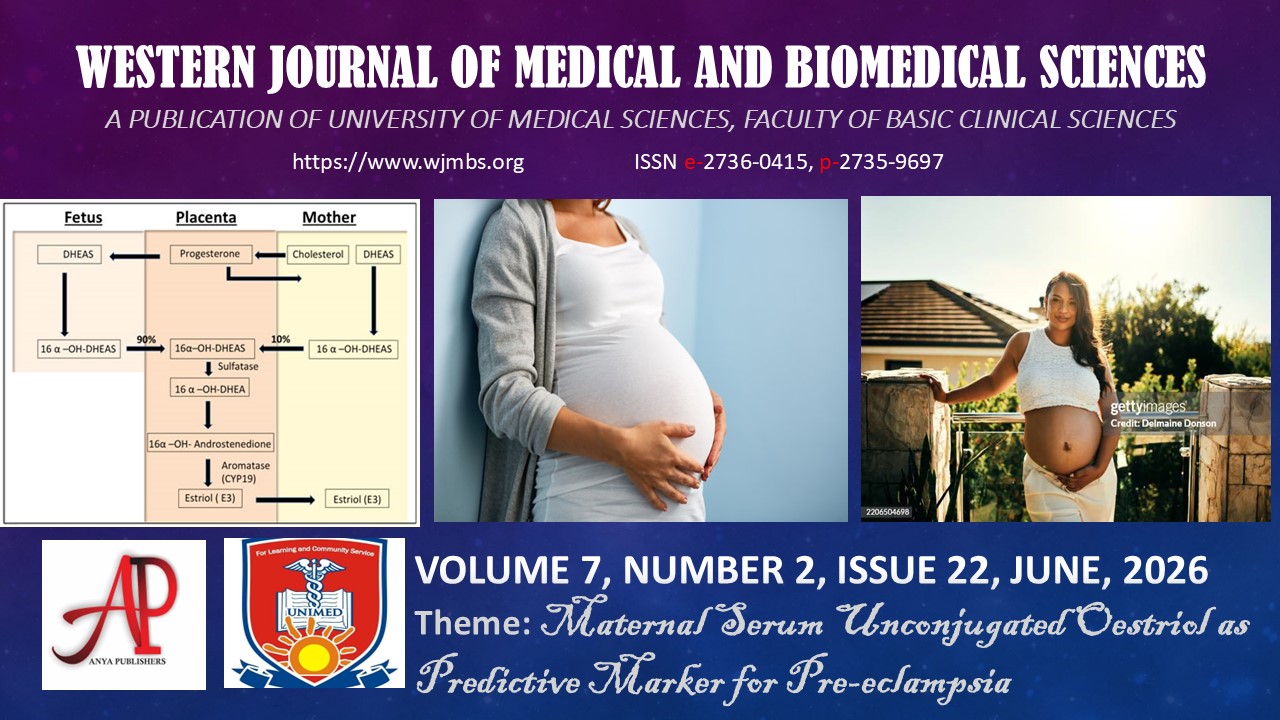
  • Maternal Serum Unconjugated Oestriol as Predictive Marker for Pre-eclampsia
    Vol. 7 No. 2 (2026)

    Foreword
    This 22nd issue of the Western Journal of Medical and Biomedical Sciences comes with the title: “Maternal Serum Unconjugated Oestriol as Predictive Marker for Pre-eclampsia” wherein the authors critically looked at the role of maternal serum unconjugated oestriol (uE3) as a predictive marker for pre-eclampsia and poor clinical neonatal outcome in Sokoto. They found that maternal serum levels of uE3 for preeclamptic women were significantly lower compared to the controls. Mothers with poor clinical neonatal babies, had lower uE3 than mothers with normal babies. They then concluded that, at cut-off value of ≤ 25.50 ng/ml for uE3, the predictive power for developing pre-eclampsia was excellent, and at cut-off value of ≤ 16.50 ng/ml for uE3, the predictive power for developing poor neonatal outcomes was good. And hence eventually recommended that maternal serum uE3 levels at the second trimester and above may be useful in predicting preeclampsia and poor clinical neonatal outcomes.
    In another study, researchers looked at the effectiveness of a physician-led primary prevention programme in reducing cardiovascular risks among vulnerable workers. This is in the midst of the increasing incidences of heart and associated vascular diseases globally including Nigeria. They found that, although changes in overall CVD risk were not statistically significant, the physician-led intervention however effectively improved major modifiable risk factors, supporting its
    potential for scalable workplace CVD prevention in Nigeria.
    Abdominal surgeries often go with it several complications especially in the tropical and sub-tropical regions of the world where qualitative healthcare facilities are in short supply. A team of researchers in Benin-city assessed the determinants of pulmonary morbidities following elective abdominal surgery at the University of Benin Teaching Hospital. And they found that, pulmonary complications were more frequent in patients older than 60 years (69.6%) and in those with pre operative shortness of breath (88.9%). Significant predictors were found to include smoking (p = 0.014), low serum albumin (p = 0.021), COPD (p =  0.025), use of long-acting muscle relaxants (p = 0.048), prolonged surgery > 2 hours (p < 0.001) and elevated pre-operative respiratory rate (p = 0.010). ASA Class III patients had the highest complication rate (73.1%). Postoperative pulmonary complications arise from both modifiable and non-modifiable factors. They therefore recommended focusing on the modifiable factors that offer the greatest potential to reduce the burden of POPCs and improve surgical outcomes, especially in resource-limited settings.
    The eye as we know is the window through which we see the world, and proper management of eye diseases ensures a good eye sight to productively engage the world. Here a team of researchers presented a case of bilateral rhegmatogenous retinal detachment (RRD) following sequential cataract surgeries performed at different centers, including a community outreach setting. This is a classical case of a poorly managed preventable cause of blindness but nevertheless leading to irreversible  blindness; a scenario reminiscent at high frequency in the developing world. They therefore advised that cataract surgery in outreach settings along with several other sensitive surgeries performed under such gross infrastructural and logistic deficits, if must be done, must adhere to strict clinical protocols, including proper patient selection, risk assessment, and structured follow-up systems to prevent avoidable blindness.
    Professor Michael Simidele Odimayo
    Editor-In-Chief
    30th June, 2026

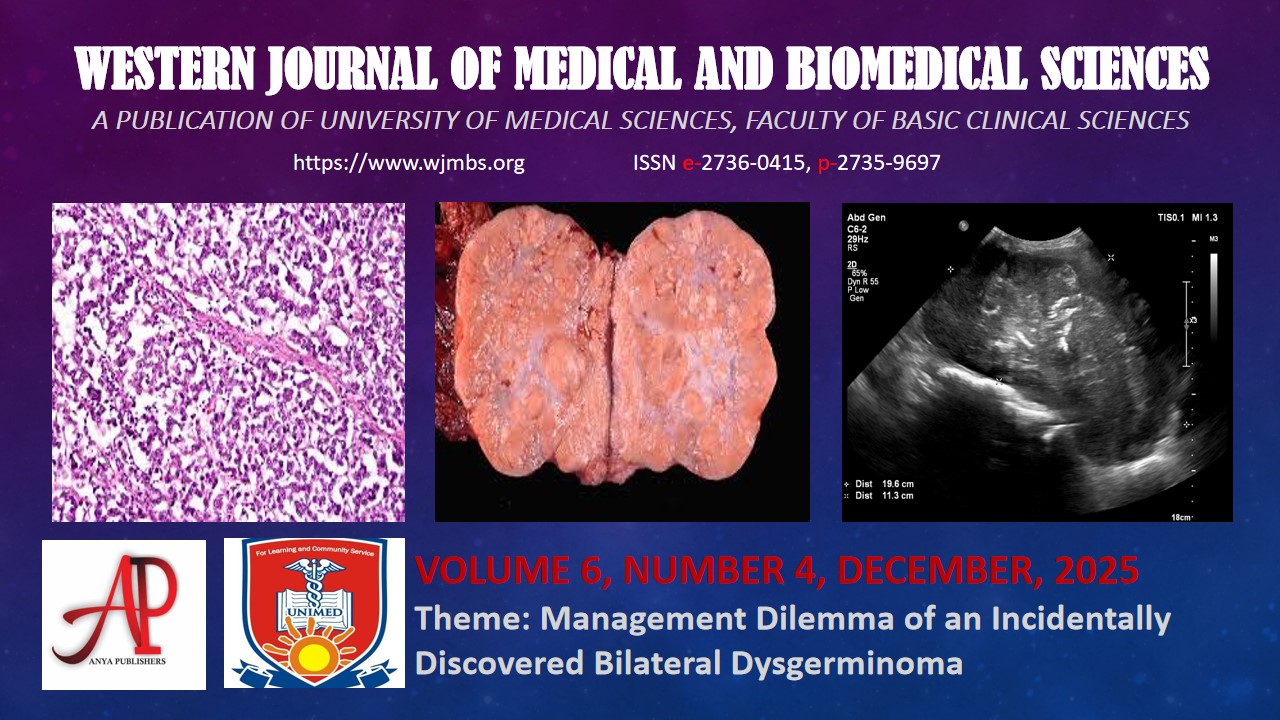
  • Management Dilemma of an Incidentally Discovered Bilateral Dysgerminoma
    Vol. 6 No. 4 (2025)

    Foreword

    This issue, which is the last for the year 2025, comes with the theme: “Management Dilemma of an Incidentally Discovered Bilateral Dysgerminoma” where a team of researchers stumbled upon this clinical condition during an emergency cesarean section in a primigravida. The authors stated that, the client had a normal, regular ante-natal visits with normal pregnancy progression; and the bilateral ovarian dysgerminoma only presented as a case of arrested labour which necessitated an emergency surgery. They therefore advised clinicians to be meticulous in the management of pregnant women, especially in the tail end of apparently normal pregnancies as such incidents may spring up surprises. In another study, a team of researchers investigated the extent and scope of serum lipid profiles and their association with cardiovascular diseases in patients with diabetes and hypertension. And they found the mean lipid values for hypertensive versus diabetic patients when compared were as follows: HDL (1.3±0.8 vs 1.2±0.3, t=1.737, p=0.08), LDL (3.3±1.0 vs 3.1±1.1, t=2.170, p=0.03), total cholesterol (5.3±1.2 vs 5.2±1.7, t=0.598, p=0.55), and triglycerides (1.6±1.0 vs 1.6±0.6, t=0.389, p=0.70). The predominant lipid abnormality among both hypertensive and diabetic patients was hypercholesterolaemia. Management of such patients should therefore factor this finding in the drug formulations and dietary advice for the desired results. Due to the growing burden of complete or partial blindness globally including Nigeria, researchers sought to describe the patterns of refractive errors known to be among the common causes of preventive blindness at Barau Dikko Teaching Hospital, Kaduna Northwest Nigeria. Out of the 4,640 eyes of 2,888 people studied, comprising 1,114 males (38.6%) and 1,774 females (61.4%): myopia occurred in 1,574(33.9%) eyes, maximum was -13D, hypermetropia in 1,964(42.3%) maximum was +4D in naturally occurring and +16D in aphakic and astigmatism in 480(10.4%). Astigmatism consisted of 291(60.6%)  myopia, 59(12.3%) hypermetropia and 130(27.1%) were mixed. They recommended regular eye checks to arrest preventable blindness in our communities. Due to the socio-economic challenges, in addition to the diverse health needs of patients with chronic kidney disease, researchers looked into the Health-Related Quality of Life (HRQOL) of haemodialysis patients. And they found that the overall HRQOL was average to above average. Regular outpatient visits, having health insurance, and level of annual income were all critical factors that affected HRQOL. Physical functioning was most significantly affected, with 78% of respondents reporting work limitations due to physical health problems.Management of patients with this clinical conditions should therefore be all encompassing targeting total well-being. 

    Professor Michael Simidele Odimayo

    Editor-In-Chief

    31st December, 2025

  • Renal Resistivity Index and its Relationship with other markers of renal damage in Sickle Cell Disease
    Vol. 6 No. 2 (2025)

    FOREWARD

    This Volume 6 Number 3, the third issue for WJMBS 2025 goes with the title: “Assessment of the usefulness of maternal serum beta-human chorionic gonadotrophin as predictive marker for pre eclampsia and poor clinical neonatal outcome” where authors critically looked at the maternal plasma levels of beta-human chorionic gonadotrophin and its effect on pregnancy-related hypertension and neonatal outcomes. They found that maternal serum levels of βhCG of preeclamptic women were significantly higher compared to the controls (5189.91±7.35, 3943.71±53.21 mIU, p=0.000). Also, there were significant negative correlations between βhCG, with birth weight (r=-0.371, p=0.000), and Apgar score (r= -0.385, p=0.000). They therefore concluded that the predictive power of βhCG for developing pre-eclampsia and poor neonatal outcomes was excellent and good, respectively. In another study, a team of researchers looked at the patterns, predictors and delays in diagnosing retained placenta at a tertiary hospital. They found that: Most patients were unbooked 15 (71.4%) and multiparous 11 (52.4%). and that unbooked pregnancy 15 (71.4%), preterm delivery 10 (47.6%), and previous D&C 8 (38.1%) were the common risk factors. The commonest subtype was trapped placenta 11 (52.4%) and the average diagnostic duration of retained placenta was 82.0 ± 36.9 minutes. High parity (AOR: 26.28, p=0.032) and previous D&C (AOR: 17.14, p=0.034) were found to be the independent predictors. Due to the growing incidence of cardiovascular diseases and diabetes mellitus in Nigeria and indeed the global community, a team of researchers set out to assess the pattern of dyslipidemias, associated atherogenic risk and insulin sensitivity in type 2 diabetes mellitus among confirmed diabetic patients and control study group consisting of a healthy population. They found that: the combined dyslipidemia pattern had the highest percentage among the subjects, with a value of 52(45.6%) observed. This was followed by mixed dyslipidemias with a value of 50(43.9%). A higher percentage of increased risk of CVD was found among the subjects for CRI-I (74; 52%), CRI-II (73; 51.8%), and AC (75; 53.2%) compared with control CRI-I (15; 10.7%), CRI-II (7; 5.0%) and AC (15; 10.7%), p-values <0.001. A greater percentage of the subjects demonstrated insulin resistance, as indicated by HOMA-IR (79, 56.0%) and QUICKI (64, 45.4%), compared to the controls with p <0.001. HbA1C correlated with HOMA-IR (r=0.235, p=0.005) and QUICKI (r=-0.196, p=0.020). Mixed dyslipidemias (elevated total cholesterol, elevated LDL-C and low HDL-C) were the highest form of dyslipidemia pattern observed. And that, CRI-I, CRI-II and AC were found to be better predictors of CVD than an ordinary lipid profile.

    Professor Michael Simidele Odimayo

  • N-acetyl-β-Dglucosaminidase[NAG] / creatinine ratio in the assessment of diabetic nephropathy
    Vol. 2 No. 3-4 (2021)

    FOREWORD

    You are welcome to the second issue of the second volume of Western Journal of Medical and Biomedical Sciences (WJMBS). This edition goes with the title: “N-acetyl-β-Dglucosaminidase [NAG] / creatinine ratio in the assessment of diabetic nephropathy” where the authors looked at other more convenient ways in early diagnostic and prognostic management of diabetes/diabetic nephropathy. The changing lifestyles tending towards sedentary and feeding habits tending towards more refined and highly processed foods among Africans in the Sub-saharan region has triggered an upsurge of Diabetes mellitus to epidemic level in the region and continues to rise yearly. This team of researchers sought to find out easy ways of detection of early kidney disease associated with Diabetes mellitus so as to halt progression of kidney damage to irreversible end-stage kidney disease. And they established that detection of elevated urinary NAG/Creatinine ratio is an early warning sign of kidney disease among patients with Diabetes nephropathy, hence calling for early intervention to save the kidney.
    Dyslipidaemias have generally been known to be associated with the anti-retroviral drugs used in the management of HIV/AIDS disease and authors in a study in this edition sought to know the differences in the patterns of plasma lipid profile changes among HIV patients on antiretroviral medications and those not. They observed elevated serum cholesterol and High-Density Lipoprotein (HDL) levels as well as derangements in anthropometric parameters predisposing to obesity. This shows that morbidities and mortalities in HIV/AIDS patients may also be as a result of the metabolic effects of the drugs used in its management rather than the virus itself.
    Postpartum haemorrhage (PPH) is still a common obstetric presentation at health centres across Nigeria, Africa and is indeed not uncommon in the developed parts of the world as well. In a study in this edition, a team of researchers set out to ascertain the incidence, maternal and perinatal outcomes of postpartum haemorrhage and its maternal outcome at a Federal Medical Centre in Nigeria. They found out that Primary PPH was the commonest presentation which was observed in about 85% of the cases, and that PPH was commoner in the unbooked patients. They then recommended early booking for all pregnant women to guard against this common complication.
    There have been massive vaccination campaigns to bring down the rate of spread of COVID-19 across the globe, and this effort appears to be on the verge of being challenged now by the new SARS-CoV-2 variants as a result of its rapid mutations. We now have alpha, beta, gamma, kappa, delta variants among others but the most virulent of them all so far is the delta variant which has been causing localized epidemic spikes across the globe and has started developing resistance to the vaccines. It is our view that composition of future COVID-19 vaccines should strongly consider the possibility that vaccine escape is just by the corner. Also, the supply of vaccines so far to Africa does not depict equity with a wide gap between the High income and the low-income countries. This lopsidedness in vaccine distribution should be corrected to guarantee the possibility of a world free from COVID-19 in the future.

    Professor Godwin Terver Jombo
    Editor-in-Chief

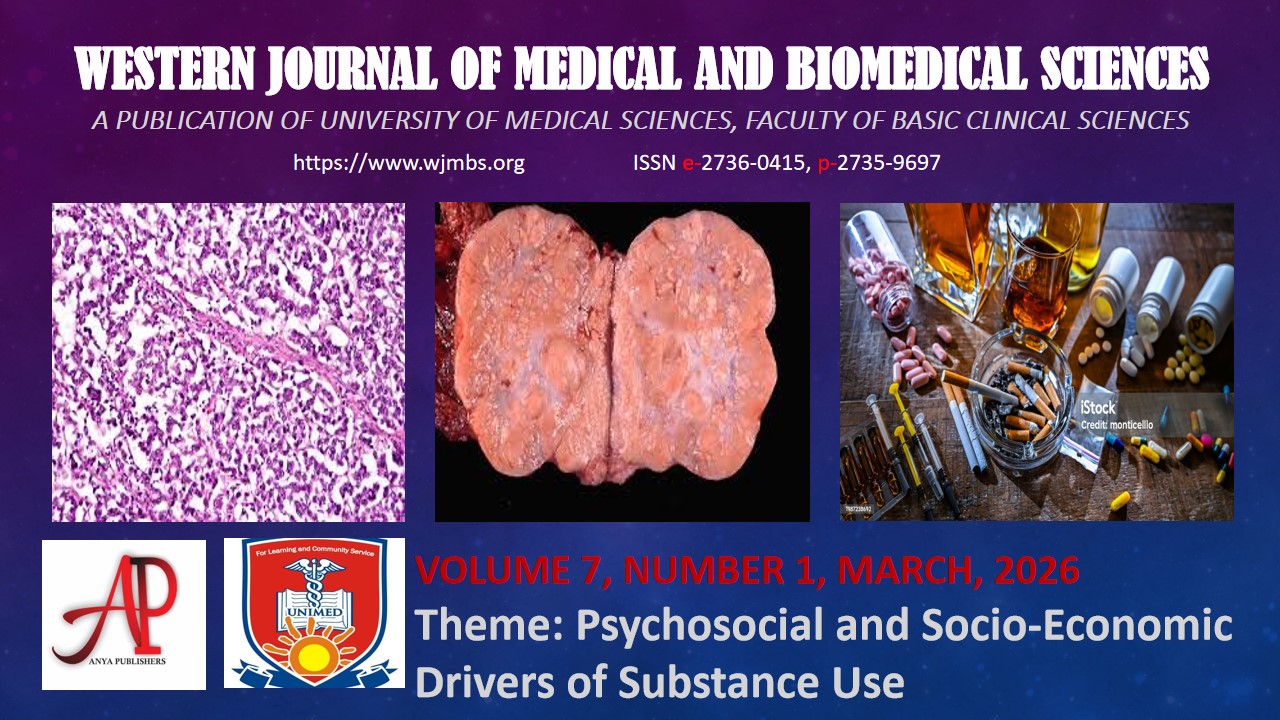
  • Psychosocial and Socio-Economic Drivers of Substance Use
    Vol. 7 No. 1 (2026)

    Foreword

    This issue, the first in the 2026 series comes with the title: “Psychosocial and Socio-Economic Drivers of Substance Use” in which a team of researchers carried out a study on a cross-sectional analysis of psychosocial and socio-economic drivers of substance use among youth in Kaduna metropolis, northwest Nigeria. They found that: lifetime prevalence of substance use was 42.8%, and current use prevalence was 36.8%. Alcohol, cannabis, and tramadol were the most common substances used and peer pressure was found to be the predominant contributing factor. They recommended interventions by targeting specific peer group dynamics, mental health, and also enhancing family/social support systems. In another study researchers looked at the patterns of Congenital Heart Diseases (CHDs) in the pediatric population using a 2D echocardiography at university of benin teaching hospital. They found that acyanotic CHDs predominated (82.1%) with atrial septal defects (34.0%) and ventricular septal defects (31.6%) being the most common lesions. Also tetralogy of Fallot (11.6%) was the most frequent cyanotic CHD. And nearly half of the children (47.6%) had severe CHDs. They therefore recommended that preventive measures should be targeted towards the risk factors observed which were: maternal education, marital status, tribe, and place of residence.

    Rabies appears to have been largely controlled in many parts of the world in the 21st century, particularly through domestic animal vaccination. Here, researchers presented a case of late presentation of rabies with encephalopathy at a facility with limited technological and infrastructural endowments. Patient management was challenging, with a poor outcome. They therefore advocated for strong and regular advocacy and sensitization about canines serving as vectors for the disease in our communities. It is generally believed that Human Papilloma Virus (HPV) is strongly associated with Nasopharygeal Carcinoma (NPC), and hence researchers sought to find expression of HPV genes in cases of this cancer. And they found that all the samples tested showed adequate DNA quality with successful β-globin amplification but none of the NPC cases demonstrated detectable HPV DNA by PCR. This indicates a possibility of other underlying factors in the aetiopathogenesis of NPCs generally.

    Blood donation is always a welcome development among major health facilities across the country to address both emergency and pressing medical needs. In this study researchers sought to find out the rate of “Turn back” among prospective blood donors in the midst of the growing need for the product. Findings showed deferral rate to be 14.7% and that deferred donors were predominantly young males, with a mean age of 29.4 ± 7.7 years and a male-to-female ratio of 298:1, and the majority were family-replacement donors (95%). Permanent deferrals (85.6%) were chiefly due to HBV (51.4%), followed by HCV (18.7%), VDRL (11.3%), and HIV (4.2%). Temporary deferrals (14.4%) were mostly due to low PCV (9.6%).

    Professor Michael Simidele Odimayo

    Editor-In-Chief

    31st March, 2026

  • Getting Ready for One Health Approach to Tackling Global Health Insecurity
    Vol. 4 No. 3-4 (2023)

    Foreword

    This issue Volume 4, Issue 3-4; being the last for the year 2023 goes with the title “Getting Ready for One Health Approach to Tackling Global Health Insecurity”. The authors in their review article expressed concern over the rising incidence of emerging and re-emerging infectious diseases along with attendant overwhelming antimicrobial resistance. They strongly believed that involvement of animals in these clinical conditions is highly possible and a holistic approach to healthcare combining both human and animal health could stem this tide. Also a rare case of dilated cardiomyopathy was reported in an 11 months old child who recently recovered from measles. The authors noted that measles is a rare cause of acute myocarditis though, health personnel managing children with measles should as well be mindful of this complication and hence assess and manage the heart properly. Â team of researchers examined the level of effectiveness or otherwise of mass drug administration in the control of urinary schistosomiasis in an endemic society. They found that mass chemotherapy did not completely stop Schistosoma haematobium infection in the community, hence prompting the need for other additional control measures. The interrelationship between nutrition and infection in the elderly was also studied. The authors found that elderly patients were predisposed to infection and malnutrition because of specific changes in the various tissue and organ functions and that, the ability to take in nutrients by the elderly decreases to a larger degree, leading to a negative balance in nutrition. They recommended a comprehensive care of the elderly to include proper nutritional balance as well as prevention and control of infections among others.

    Professor Michael Simidele Odimayo

    Editor-In-Chief

    30th December, 2023