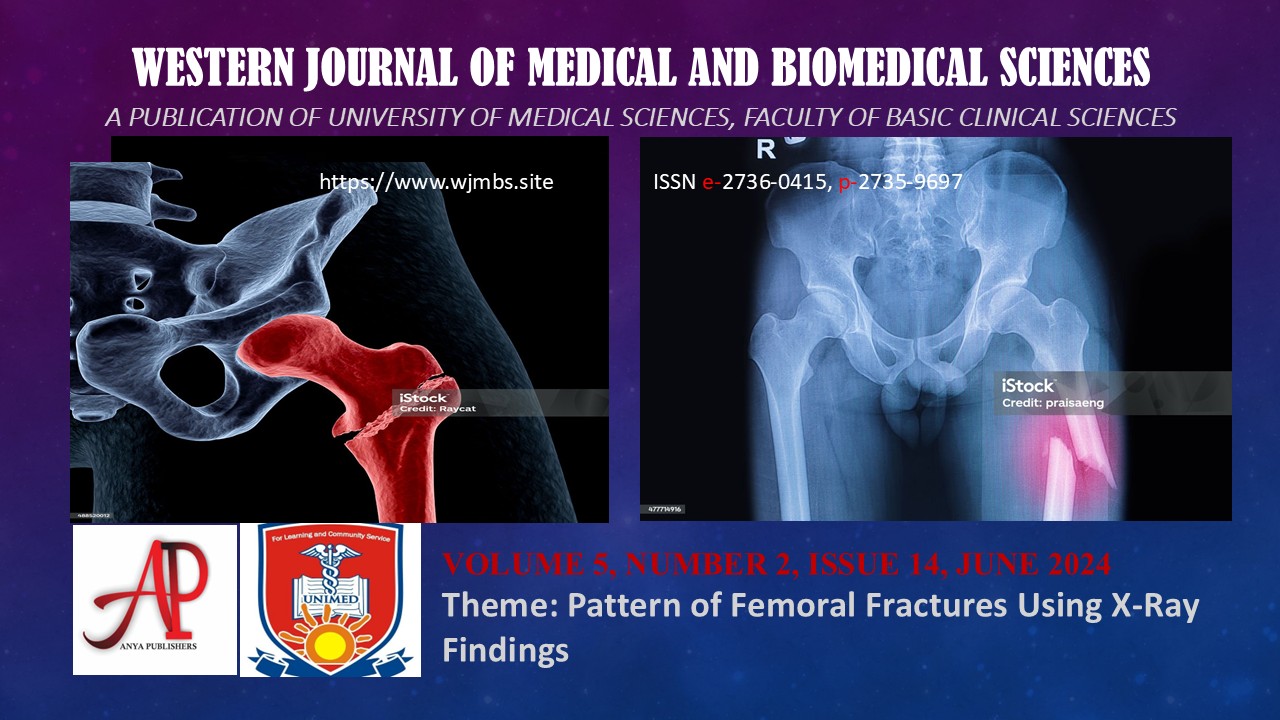
Assessment of the Pattern of Femoral Fractures Using X-Ray Findings of Patients Presenting at Irrua Specialist Teaching Hospital (ISTH), Irrua, Edo State, Nigeria
Keywords:
Femoral fractures, Road Traffic Accidents, X-rayAbstract
Femoral fractures are common presentations at the accident and emergency sections of hospitals, generally caused by high-energy forces, and often associated with multisystem trauma. The spectrum of the fracture ranges from non- displaced fractures to severely comminuted and segmental fractures. Variation in this spectrum is dependent on the direction of the force applied and the amount of energy absorbed by the femur at the time of the fracture. This study aimed at evaluating the pattern of femoral fractures using x-ray findings of patients who presented at Irrua Specialist Teaching Hospital (ISTH), Irrua, Edo state, Nigeria, between January 2020 and December 2021. The study adopted a retrospective descriptive study design. Findings from this study on the pattern of femoral fracture recorded among the 95 patients who presented during the period under review revealed that, 58 (61.10%) were males while 37 (38.90%) were females. Patients aged 19 to 59 years were most commonly affected by femoral fractures (n = 63, 66.32%). Road Transport Accidents was identified as the leading cause of femoral fractures (n = 72, 75.80%), distal comminuted femoral fracture was the most common fracture (n = 35, 36.80%) and internal fixation was the most common treatment method (n = 40, 42.10%). It is recommended that those in charge of healthcare planning at ISTH, Irrua ensure that equipment and manpower needed for treatment of femoral fractures are readily available. Also, traffic authorities are encouraged to develop strategies aimed at reducing Road Transport Accidents (RTAs) and consequently femoral fractures amongst individuals.